Buying back capacity at the CPF — with a modular wellpad next door.
Scope
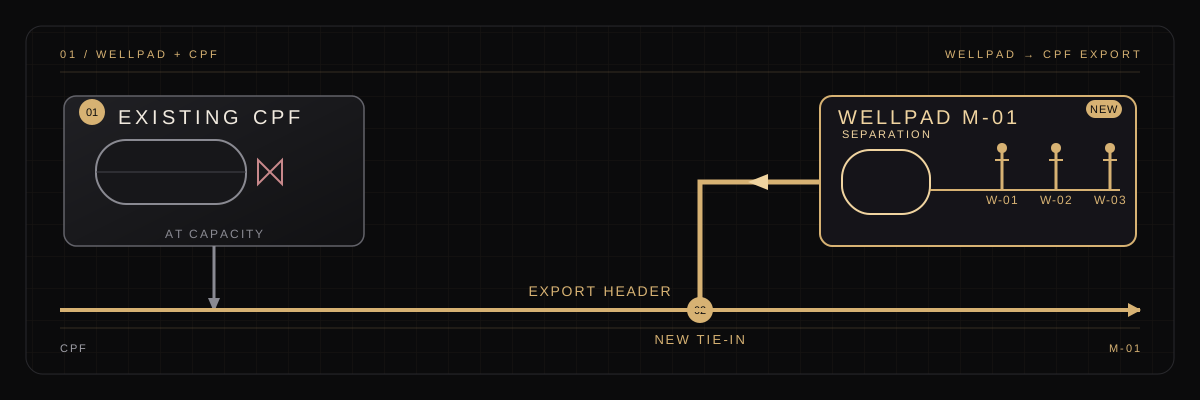
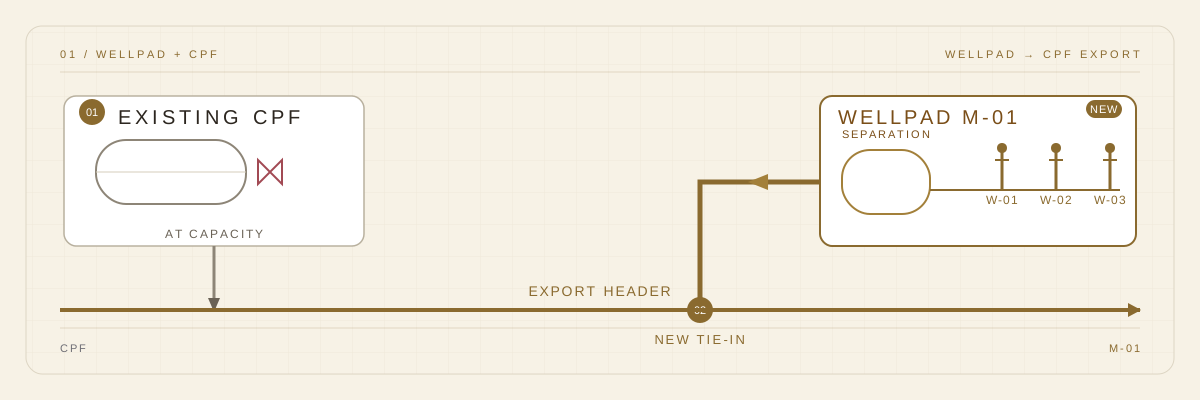
FEED for a modular production facility designed for an onshore New Zealand wellpad to debottleneck the existing Central Production Facility. The new wellpad module would handle additional well tie-ins beyond the CPF's current capacity — without requiring a rebuild of the CPF itself.
The work had to provide the client with an execution-ready package: PFDs and P&IDs, equipment datasheets, project specifications and a Class 2 cost estimate ready to take to tender.
Engineering decisions
The starting point was Matahio's production forecast and the CPF's current process limits. From those, a modular wellpad facility was sized, simulated and developed through PFDs and P&IDs to a level ready for execution tendering.
The module's footprint, utilities and tie-in points were chosen to minimise interruption to the existing CPF. Process, static and rotating equipment specifications were taken to a level suitable for vendor RFQ and bid evaluation.
Engagement
Surface Facilities Engineering Lead through FEED. Owned the surface facilities basis of design and the Class 2 cost estimate, coordinated discipline engineering and managed vendor engagement end to end.
Outcome
The client received a coordinated FEED package with a Class 2 cost estimate, ready for execution tendering. The selected modular arrangement created a route to add well capacity while avoiding reconstruction of the existing CPF.
Deliverables
- Project schedule and planning
- Class 2 project cost estimate
- Project resource estimate
- Surface facilities basis of design
- Surface facilities process simulation
- Surface facilities PFDs and P&IDs
- Heat & material balance
- Equipment datasheets — static and rotating
- Main project specifications
- Vendor RFQs, liaison and bid evaluation
Need an execution-ready plan for a brownfield constraint? Tell me about your scope.
Next case study: Chevron Seawater Injection